In short
- Indian sandalwood is a root hemi-parasite, so every sapling is planted with host plants that share water and nutrients.
- Year one is about survival and roots: land preparation, monsoon planting, drip watering, weeding and protection.
- Red soil with pH 7.1 and a 10 to 40 degree C range near Hindupur suit sandalwood heartwood development.
- Owners get regular updates and can visit the farm whenever they want.
What is a sandalwood plantation in its first year?
A first-year sandalwood plantation is a field of young saplings, each paired with host plants, that the farm team waters, weeds and protects until the roots are established.
- Crop: Indian sandalwood (Santalum album), a slow-growing tree valued for its scented heartwood.
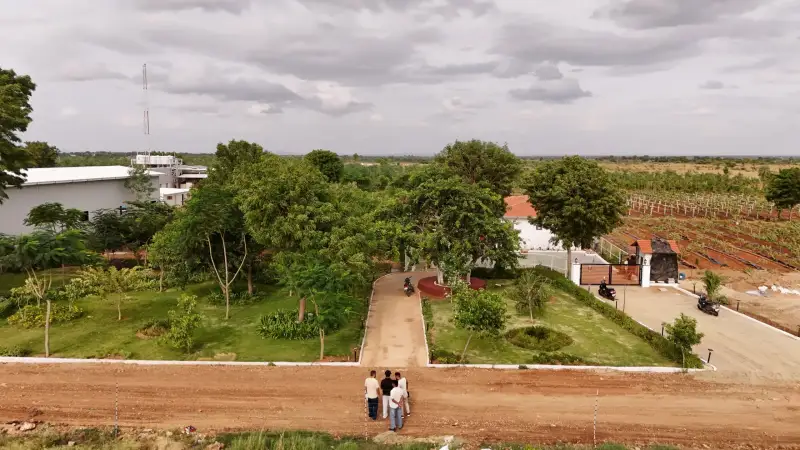
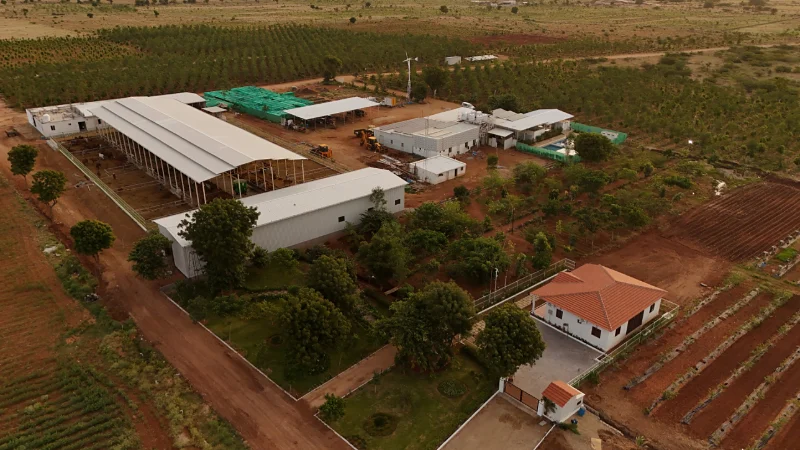
- Place: GreenX, a managed farmland project near Lepakshi, Sri Sathya Sai district, Andhra Pradesh, north of Bengaluru.
- Goal of year one: Healthy root systems and working root links with host plants, not fast height.
- Who does the work: The SmartAgro farm team plants, runs and reports on the land under a written agreement.
- Your role: The land is registered in your own name; you follow progress through updates and visits.
Read more about the project on our sandalwood farmland near Bangalore guide.
A sandalwood plantation is not built in a season. The first year is about roots, hosts and water, not height.
Before planting: land, soil and water
Preparation starts before the first sapling arrives, because sandalwood dislikes waterlogging and compacted soil.
- Soil: Red soil with pH 7.1 near Hindupur suits sandalwood; soil and water checks decide what is planted where.
- Climate: A 10 to 40 degree C temperature range in the area supports heartwood development over the long term.
- Water: Drip irrigation fed by canal, bore-well, farm pond and rainwater sources.
- Layout: Rows are marked so each sandalwood sapling has room for host plants beside it.
- Shared infrastructure: One fence line, one security team, one water system and one set of skilled staff serve the whole farm.
Why sandalwood host plants matter
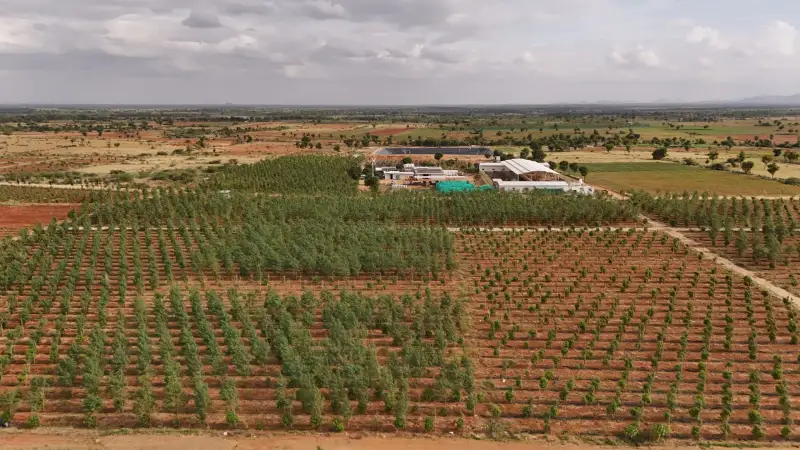
Sandalwood needs neighbours: its roots attach to the roots of host plants through small organs called haustoria and draw water and nutrients from them.
- Hemi-parasite: Sandalwood has green leaves and makes its own food, but it cannot thrive alone.
- Short-term host: A fast-growing companion such as pigeon pea supports the sapling in its early months.
- Long-term host: Hardier trees planted nearby take over as the sandalwood grows.
- Balance: Hosts are trimmed so they support, rather than shade out, the young sandalwood.
- Without hosts: Saplings struggle, which is why hosts are planned into the layout from day one.
For the science, see why sandalwood needs host trees.
Planting with the monsoon
In this dry zone of Andhra Pradesh, saplings are usually planted as the monsoon sets in, so rain helps the roots settle.
- Pits: Pits are dug and filled with soil mixed with organic matter.
- Host first: The short-term host is placed beside each pit so roots can meet early.
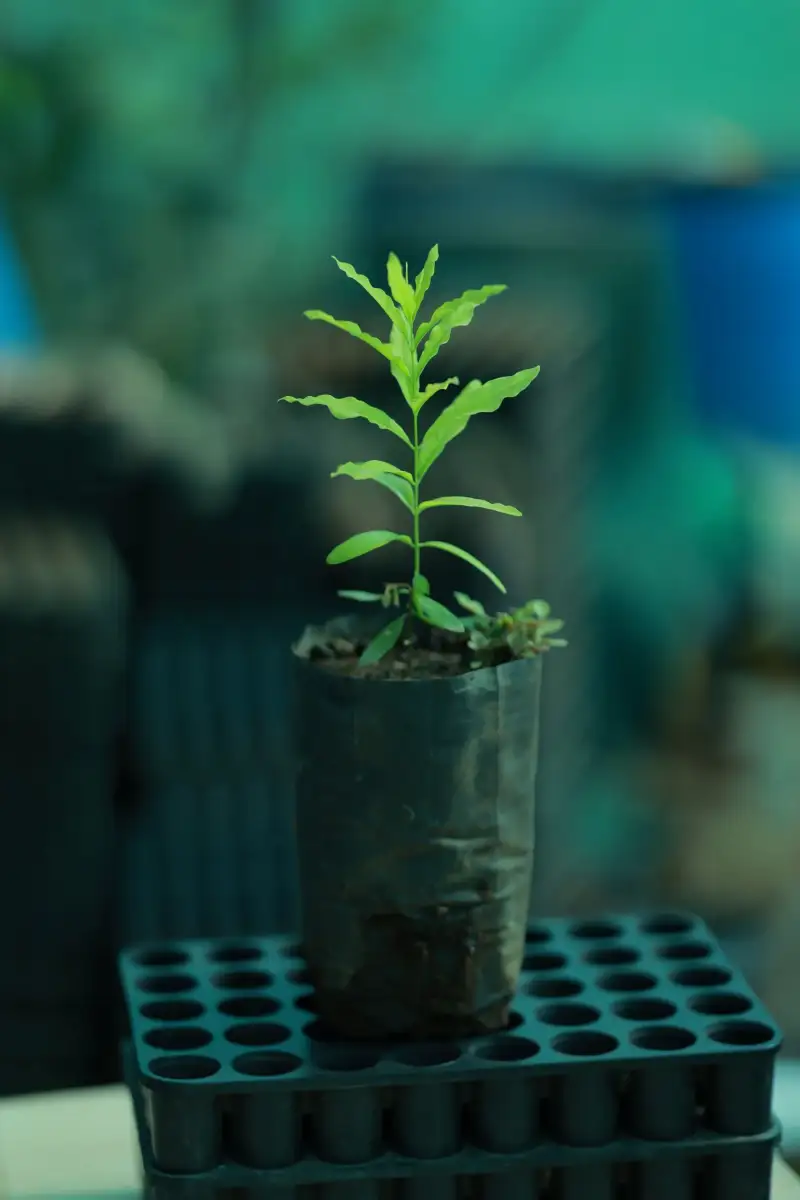
- Sapling: The nursery sapling goes in without disturbing its root ball.
- Mulch: A layer of mulch holds moisture and slows weeds.
- Drip check: Each line is checked so every plant gets water at the root zone.
| Period | Main work | What you see |
|---|---|---|
| Before planting | Soil and water checks, layout, drip lines | Prepared rows |
| Monsoon onset | Pits, host plants, saplings, mulch | Newly planted rows |
| Months 2 to 6 | Watering, drainage, weeding, gap filling | Saplings settling in |
| Months 7 to 12 | Protection, pest watch, pruning, summer watering | Established young plantation |
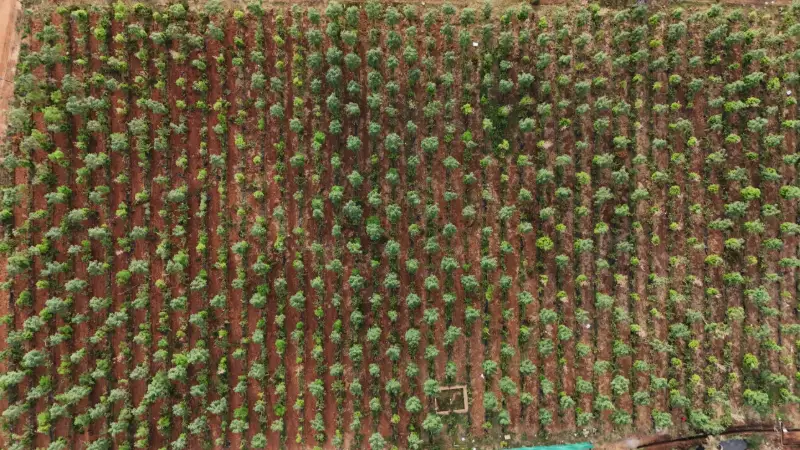
Months two to six: young sandalwood plant care
Young sandalwood plant care in the first months is simple but constant: the right amount of water, clean rows and early warning of problems.
- Watering: Drip delivers small, regular amounts; too much water is as harmful as too little.
- Drainage: During heavy rain, channels are kept clear so water does not pool around stems.
- Weeding: Weeds are cleared around each plant so they do not compete with the sapling and its host.
- Gap filling: Any sapling that does not take is replaced in season.
- Soil life: On a well-run farm, mulch and organic matter keep the soil loose and moist around the roots.
Months seven to twelve: protection and steady growth
In the second half of the year the focus moves to protection, light pruning and getting the plantation through its first dry summer.
- Protection: The shared fence and security team keep out stray cattle and trespassers.
- Pest watch: Leaves and stems are checked for pests and disease so problems are handled early.
- Pruning: Lower side shoots may be removed carefully to encourage a straight main stem.
- Host trimming: Hosts are cut back where they start to crowd the sandalwood.
- Summer water: Drip schedules are adjusted as temperatures rise towards 40 degrees C.
What owners see in the first year
You do not need to farm the land yourself: the farm team does the work and keeps you informed.
- Updates: Owners get regular updates on the plantation.
- Visits: You can visit the farm whenever you want; site visits to GreenX include a free cab with doorstep pick-up.
- Ownership: Your plot is registered in your own name at the Sub-Registrar Office.
- Weekend home: A built-up area of up to 10% of the plot is allowed, as per the government rule.
- Questions: Pricing and payment questions go to our sales team.
Planning a trip? See what to check on a managed farmland site visit.
Frequently asked questions
What happens in the first year of a sandalwood plantation?
Why does sandalwood need host plants?
Is the soil near Lepakshi suitable for sandalwood?
Do I need to work on my sandalwood plot?
Whose name is the land registered in?
Reading is one thing. Walking the farm is another.
Come for a site visit, stand on the plots and ask our team whatever is on your mind.