Key takeaways
- Indian sandalwood is a root hemi-parasite. It needs host plants to grow well.
- A plantation is a planned community: primary hosts, long-term hosts and intercrops.
- Value is in the heartwood, which forms slowly. Plantations are planned over about 15 years.
- Growing sandalwood on private agricultural land is legal; harvest and transport need permissions.
Indian sandalwood (Santalum album), known in Karnataka as Srigandha, is prized for its fragrant heartwood and oil, used in perfumery, cosmetics, incense and fine craft. It has been part of South Indian life for centuries. It is also an unusual tree to grow, because it cannot thrive on its own.
If you are looking at sandalwood farmland, understanding this one fact explains almost everything about how a plantation is planned, why it takes the time it does, and why expert care matters.
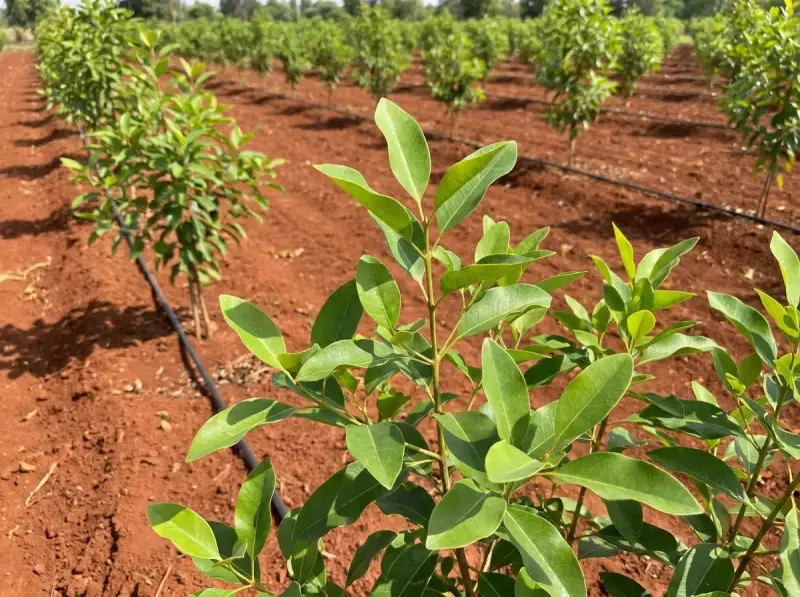
A tree that borrows from its neighbours
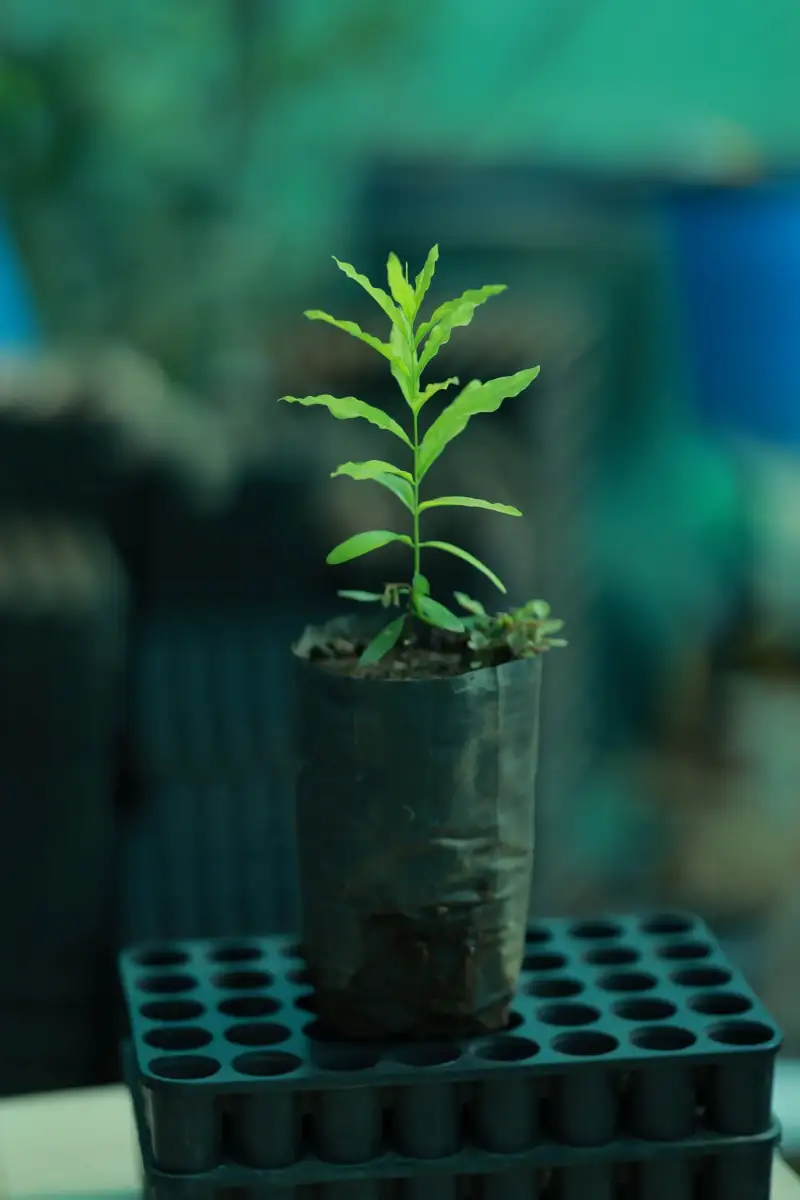
Sandalwood is a root hemi-parasite. It has green leaves and makes its own food through photosynthesis, so it is not a full parasite. But its roots form small connecting structures called haustoria, which attach to the roots of nearby plants and draw water and some mineral nutrients from them.
Without suitable hosts, young sandalwood tends to struggle and grow slowly. With the right hosts at the right distance, it establishes far better. So a sandalwood plantation is not a block of single trees. It is a planned community of plants that support each other.
How a sandalwood tree borrows from its host
- 1SandalwoodMakes its own food in its leaves, like any tree.
- 2Host plantFor example pigeon pea early on, longer-lived trees later.
- 3HaustoriaSmall root links that draw water and some nutrients from the host.
What a host plant gives sandalwood
How plantations are planned
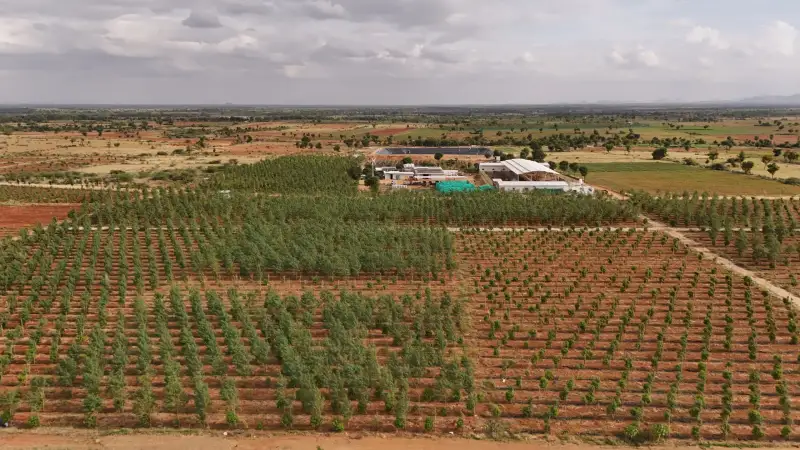
Most plantations use three layers of planting. The exact species and spacing depend on soil, water and climate, which is why agronomists plan them block by block.
The three layers of a sandalwood plantation
Fast-growing plants placed close to young saplings in the early years. Pigeon pea (tur) is a common example. They give the sandalwood roots something to attach to while it is small.
Hardier trees that grow alongside the sandalwood for most of its cycle and keep supporting it as it matures. The species are chosen for the local soil and rainfall.
Crops grown in the strips between rows. They keep the soil covered and productive, and can bring seasonal produce while the trees grow. At GreenX, the owner’s share of intercrop produce is set out in the agreement.
Why the soil near Hindupur suits it
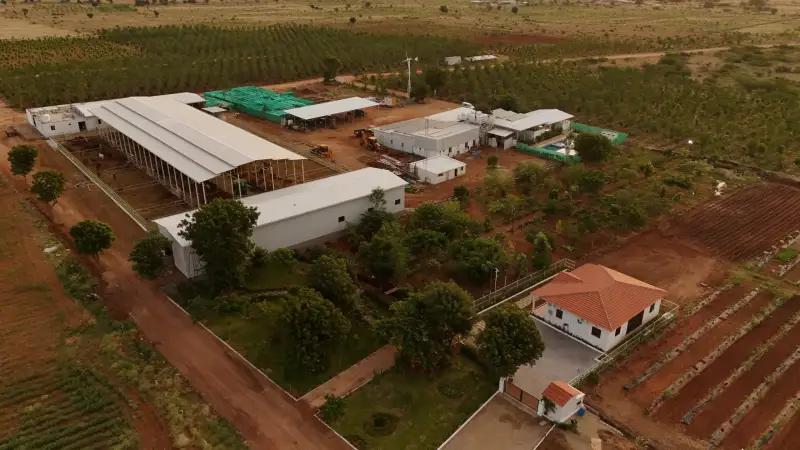
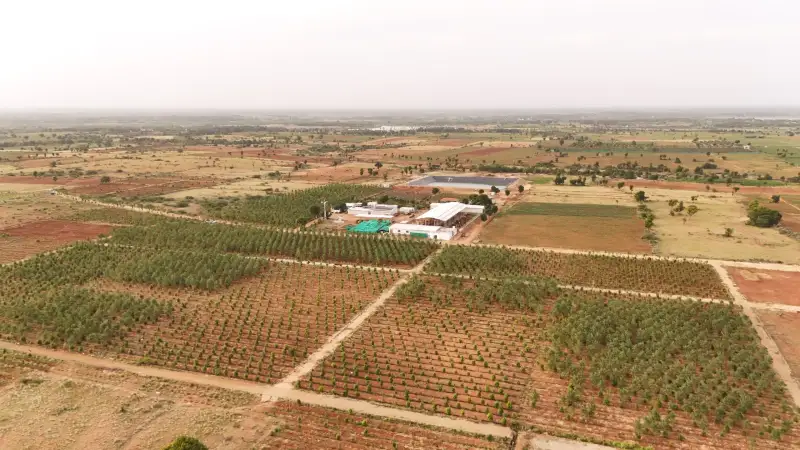
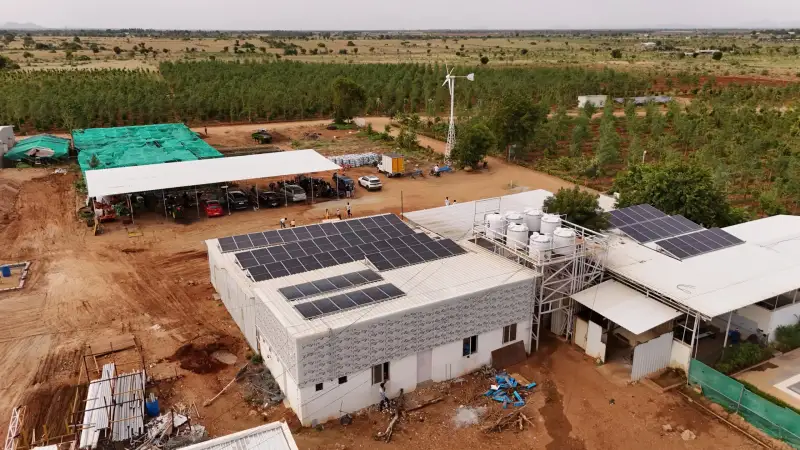
Sandalwood prefers well-drained soil and a warm, dry climate. Near Hindupur, the red soil (pH around 7.1) and a temperature range of about 10–40°C suit it well. Water at GreenX comes from several sources: canals, bore-wells, a lined farm pond, rainwater harvesting and drip irrigation. Drip lines deliver water to each plant’s root zone, which matters in a dry summer.
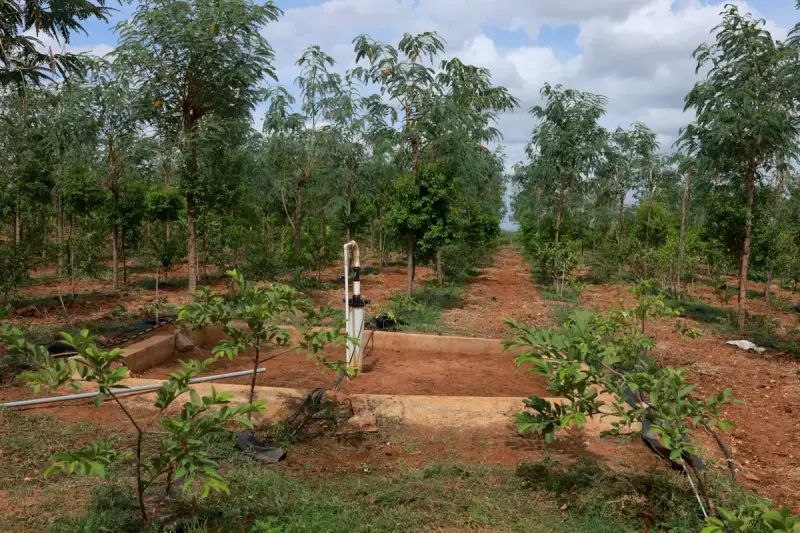

Conditions near Hindupur
Soil pH as published for GreenX. Tree count is SmartAgro’s published figure.
Why the cycle is long
The value of a sandalwood tree lies in its heartwood, the dense, fragrant core that forms slowly over many years. The outer sapwood has little value. Heartwood content also varies a great deal from tree to tree, even in the same row.
The plantation journey, in broad phases
- 01PlantingCertified saplings go in with primary hosts and drip lines.
- 02EstablishmentThe early years: hosts, watering, weeding and protection.
- 03GrowthLong-term hosts take over; intercrops run between rows.
- 04HeartwoodThe fragrant core builds slowly inside each tree.
- 05HarvestAround year 15, with permissions, grading and sale.
Phases are indicative. Timelines vary with soil, water, weather and care.
That is why responsible operators plan plantations over about 15 years, and why grades and prices are set at harvest rather than promised in advance. Anyone who quotes you a fixed kilo figure or a fixed price per tree years ahead is guessing.
Quick check
Why can’t young sandalwood simply be planted on its own in an empty field?
Sandalwood is a root hemi-parasite. It photosynthesises, but its roots attach to host plants’ roots through haustoria for water and some nutrients.
How a sandalwood tree grows through the cycle
- 1PlantingA sapling goes in beside its host plant.
- 2EstablishmentRoots link up; the team waters and weeds closely.
- 3GrowthThe canopy fills out while intercrops use the space between rows.
- 4HeartwoodThe fragrant core forms slowly inside the trunk in the later years.
Is it legal to grow sandalwood?
Yes. Growing sandalwood on private agricultural land is legal in India. Harvesting and transporting it need permissions from the forest department, so a managed farm operator should handle that on the owner’s behalf. At SmartAgro, we manage those permissions for owners.
Watch the plantation work
Experts from IWST visit GreenX
From our own YouTube channel, @smartagrofarms.
Common questions
Is sandalwood grown organically at your farms?
How many trees are on a plot?
What happens at harvest?
Was this guide useful?
Thank you. Tell us what to cover next on WhatsApp.Reading is one thing. Walking the farm is another.
Come for a site visit, stand on the plots and ask our team whatever is on your mind.