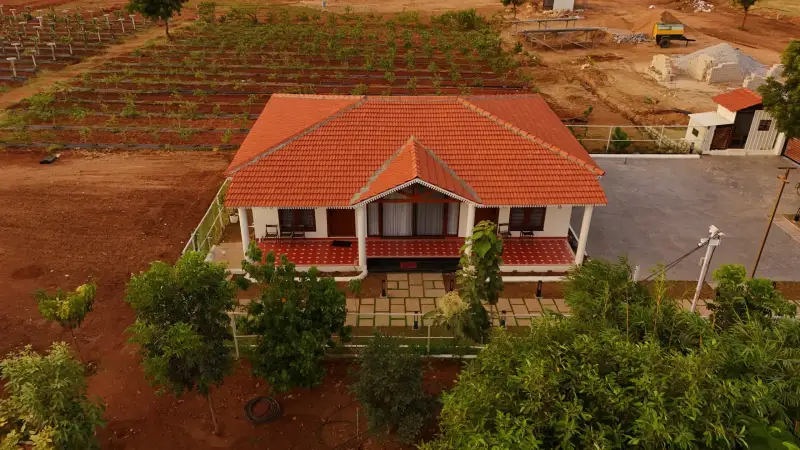
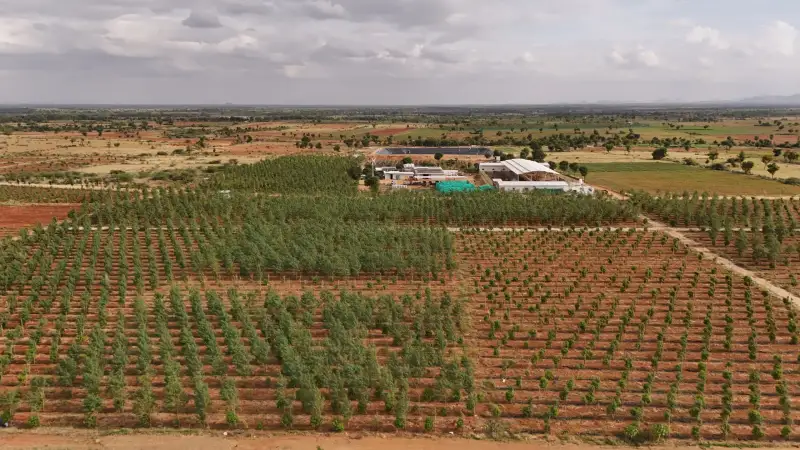
Key takeaways
- Sandalwood grows slowly and depends on host plants, so it needs expert, long-term care.
- At GreenX, the owner’s share is 70% of the sandalwood harvest and 60% of intercrop produce, as per the agreement.
- Heartwood yield, grade and price are only known at harvest.
- Growing sandalwood on private agricultural land is legal; we manage harvest permissions.
Indian sandalwood (Santalum album) is valued for its fragrant heartwood. It grows slowly and depends on host plants, so a plantation needs careful planning: certified saplings, the right hosts, drip irrigation and years of upkeep. That is why most people who want sandalwood farmland near Bangalore choose a managed plantation rather than planting a few trees on bare land.
How a plantation is planned
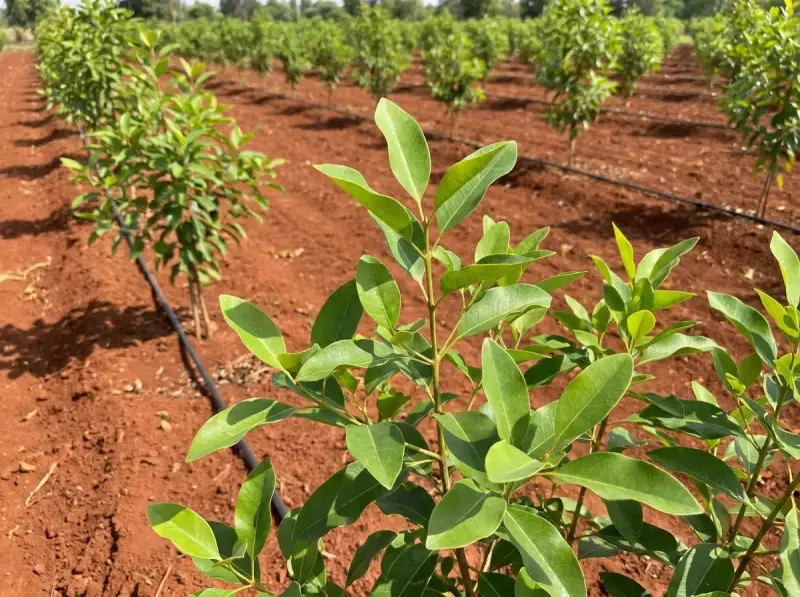
Sandalwood is a root hemi-parasite: its roots draw water and some nutrients from neighbouring host plants. Plantations use primary hosts in the early years and long-term hosts through the cycle, with seasonal intercrops between the rows.
For the science, read why sandalwood needs host trees.
How a sandalwood tree grows through the cycle
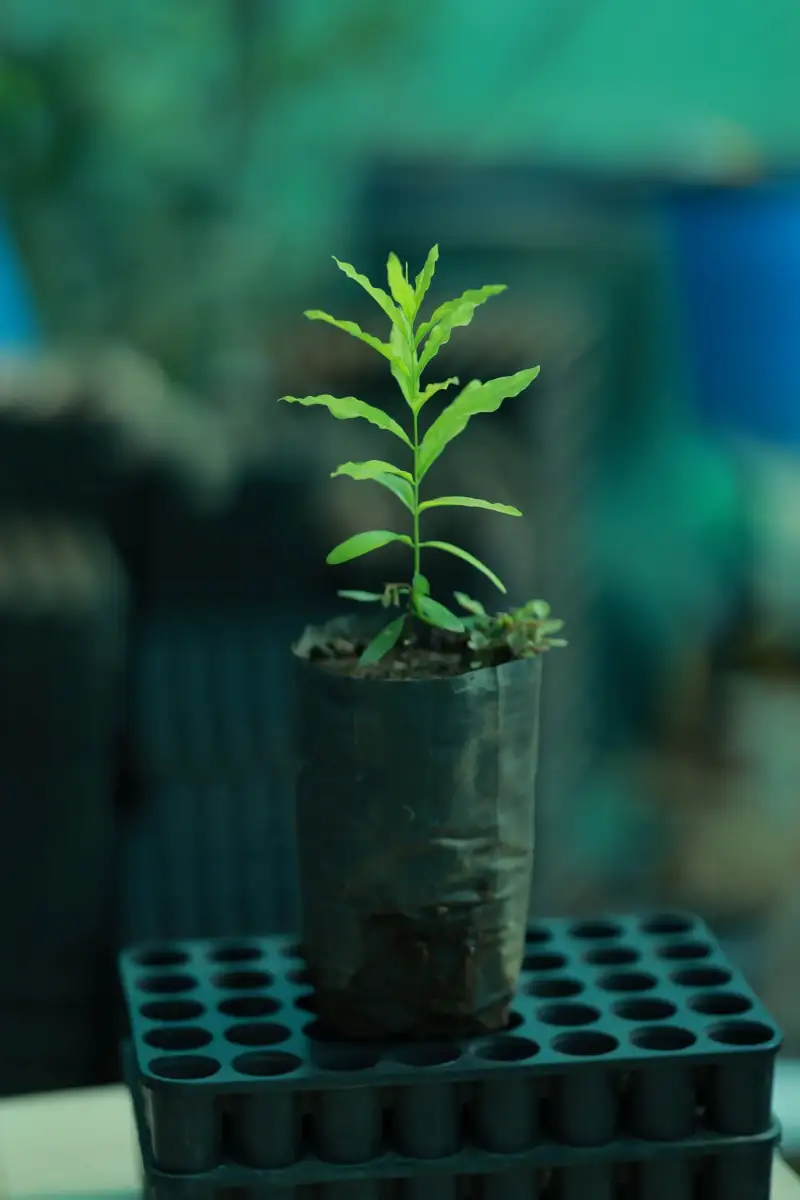
- 1PlantingA sapling goes in beside its host plant.
- 2EstablishmentRoots link up; the team waters and weeds closely.
- 3GrowthThe canopy fills out while intercrops use the space between rows.
- 4HeartwoodThe fragrant core forms slowly inside the trunk in the later years.
Sandalwood at SmartAgro
SmartAgro’s published figures.
Our sandalwood projects
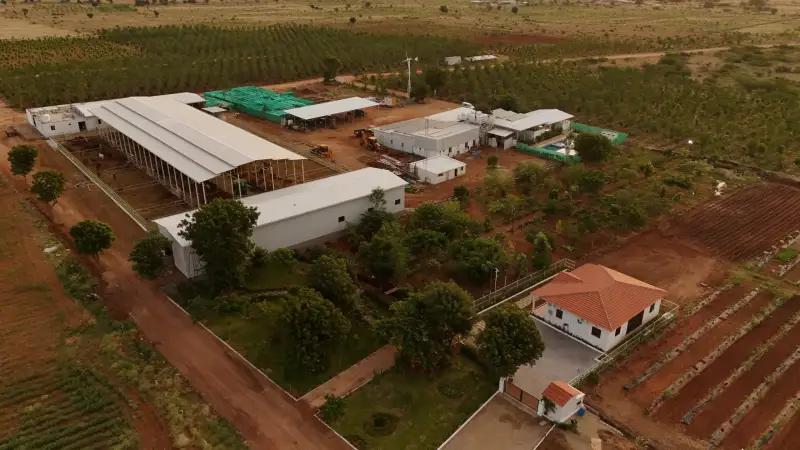
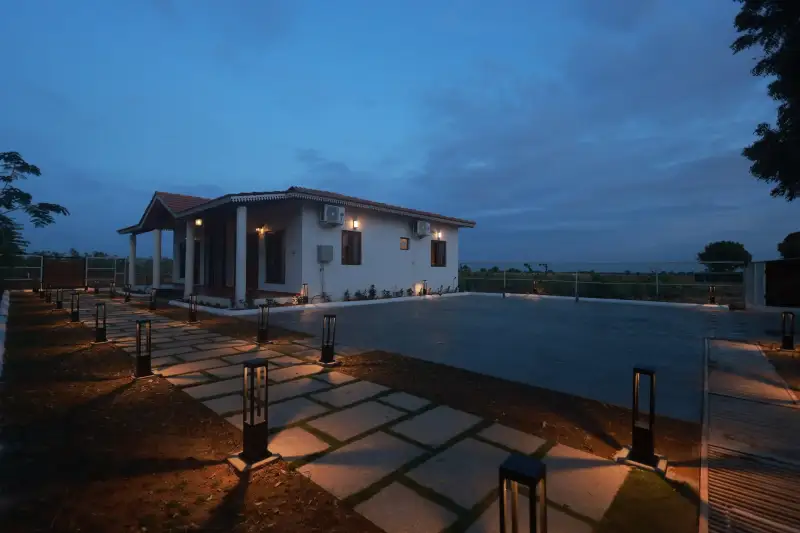
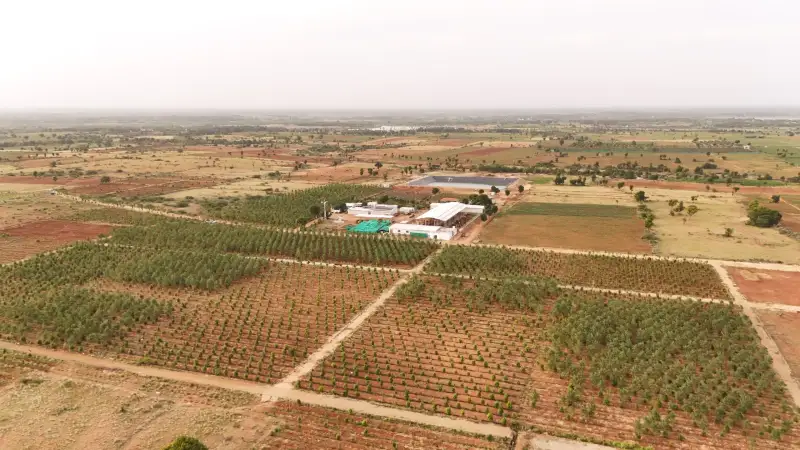
½ and 1 acre plots near Lepakshi on NH-544E, about 90 minutes from Bangalore airport. Title in your name and a 15-year managed cycle. Published price: ₹27.99 lakh for ½ acre, ₹52.99 lakh for 1 acre. See GreenX
Our first sandalwood and intercrop project, over 50 acres near Hindupur. Completed; ask us about availability. See Timber
What our team does through the cycle
Year-round care
- 01Saplings and hostsCertified saplings planted with primary hosts.
- 02WaterDrip irrigation from bore-wells, canals and the farm pond.
- 03Organic nutritionPanchagavya and Jivamrita prepared on the farm.
- 04ProtectionFencing, security and natural pest control.
- 05IntercropsSeasonal crops between rows.
- 06HarvestPermissions, grading and sale at the end of the cycle.
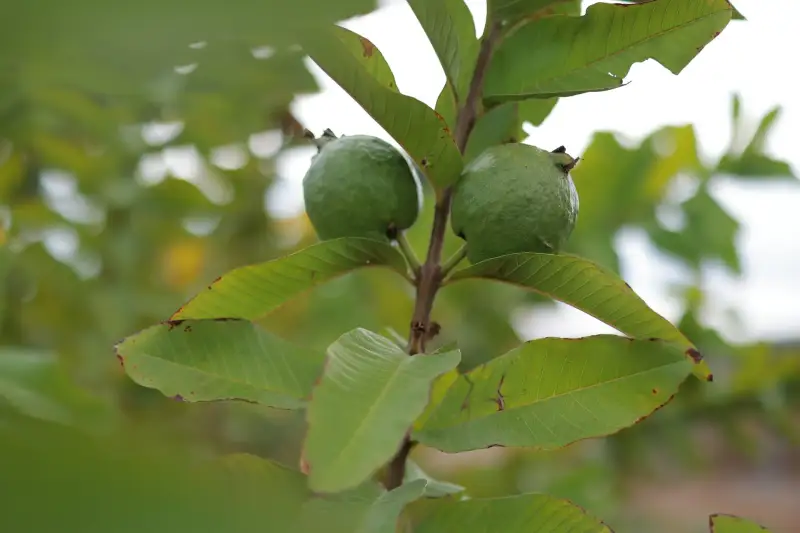
How water reaches every plant
- 1Farm pond and bore-wellStore and supply water through the dry months.
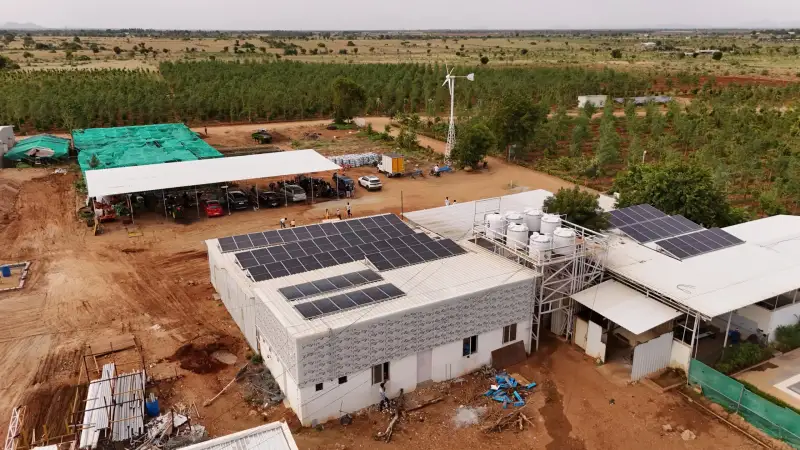
- 2PumpMoves water into the main line; solar power where the site has it.
- 3Drip lineSmall emitters put water at the root zone, not across the field.
- 4Each plantGets a measured amount, adjusted by season.
Why managed, rather than planting yourself?
It is possible to plant sandalwood on your own land, and some farmers do. The challenge for a city owner is the length and detail of the work. Young sandalwood needs the right hosts at the right distance, steady water through the first dry summers, protection from grazing animals and theft, and regular attention for many years before the heartwood is worth anything. A missed summer of irrigation, or a host plan that does not suit the soil, can set trees back permanently.
On a managed plantation, that work is done by a team on site every day, with shared fencing, security and water across the whole farm. You still own your plot and can visit any time, but you are not relying on occasional visits to keep a fifteen-year crop on track. For most families who want sandalwood farmland near Bangalore, that is the deciding factor.
How the harvest is shared
Owner’s share at GreenX, as set out in the agreement
Sandalwood harvest
Intercrop produce
The share is fixed in the agreement. The quantity, grade and price of the produce are not, and are only known at harvest.
Harvest and transport of sandalwood need permissions from the forest department, which SmartAgro manages for owners.
Organic care on our sandalwood farms
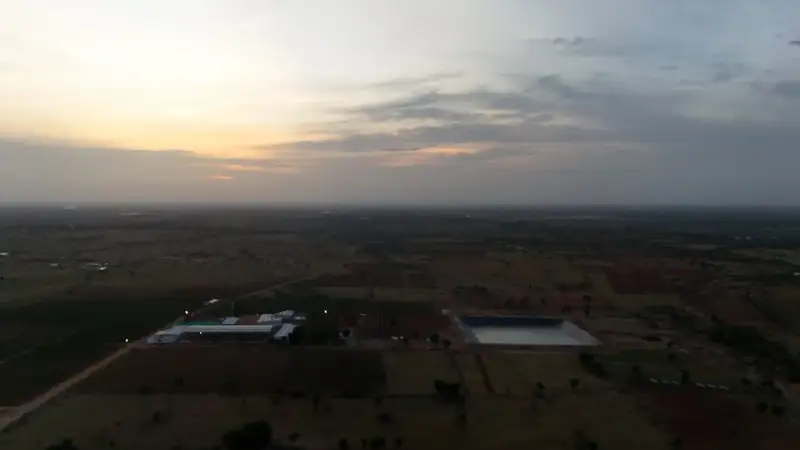
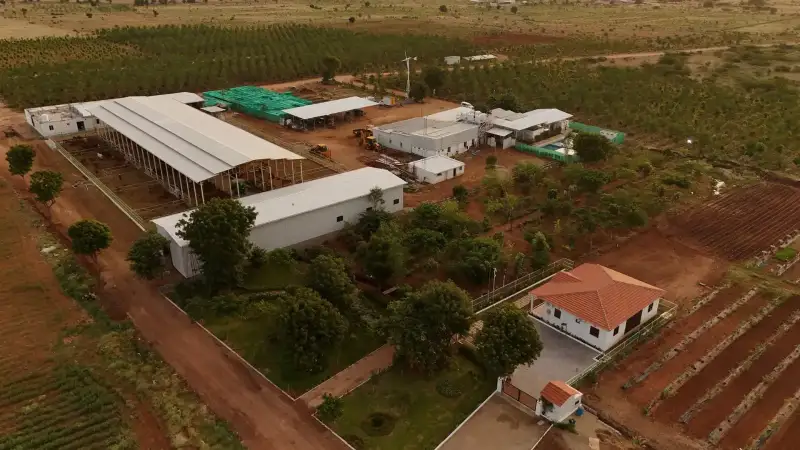
Timber from the air
From our own YouTube channel, @smartagrofarms.
What nobody can promise
Heartwood yield, grade and price are only known at harvest. Weather, tree health and markets all affect the outcome, so any projection is an estimate, not a promise. A responsible operator will show you how a projection was built and what could change it. Read our risk disclosure.
The share is in the contract. The harvest is in the hands of the weather, the trees and the market.
Quick check
At GreenX, what is fixed in your agreement today?
The share (70% of sandalwood and 60% of intercrop produce) is set in the agreement. Quantity, grade and price are only known at harvest.
Is growing sandalwood legal?
Can I see the trees on my plot?
What if a tree dies?
Was this guide useful?
Thank you. Tell us what to cover next on WhatsApp.Reading is one thing. Walking the farm is another.
Come for a site visit, stand on the plots and ask our team whatever is on your mind.