In short
- Root Parasite: Sandalwood draws water and nutrients from host trees planted alongside it.
- Red Soil: It thrives in well-drained red loam soils with a neutral pH range around 7.1.
- Long Horizon: Heartwood development takes many years of careful irrigation and seasonal pruning.
- Managed Care: Professional teams handle daily agronomy while buyers hold the land title.
What is sandalwood farming in India?
Sandalwood farming in India involves growing Santalum album for its fragrant heartwood under strict state regulations and specific botanical requirements. Managed projects near Bengaluru make this long-term agricultural asset accessible for families without a farming background.
- Botanical Nature: Santalum album is a root hemi-parasite that requires living host trees nearby to draw essential nutrients for healthy growth.
- Long Horizon: Plantations take over a decade to mature before the aromatic heartwood is fully developed and ready for harvest.
- Regulatory Framework: Cultivation, felling, and transport within India are strictly governed by state forest department rules and transit permits.
- Professional Care: Managed setups like GreenX handle the complete agronomy, drip irrigation, and security for plot owners.
- Ownership Rights: Buyers hold a sale deed registered directly in their own name at the local Sub-Registrar Office.
- Soil and Climate: Well-drained red soils and warm temperatures found in regions near Hindupur suit sandalwood heartwood development.
Understanding these biological and regulatory realities helps owners set realistic expectations for a managed plantation.
Sandalwood farming in India requires patience, precise host pairing, and steady professional care over a long horizon.
What climate and soil suit sandalwood cultivation?
Sandalwood farming in India thrives in regions with warm temperatures, abundant sunshine, and well-drained soils that prevent root rot. The Hindupur-Lepakshi corridor offers these exact environmental conditions just north of Bengaluru for healthy plantations.
- Temperature Range: Trees tolerate temperatures between 10 and 40 degrees Celsius without losing vigor or health.
- Soil Type: Well-drained red loam or gravelly red soils prevent waterlogging and reduce the risk of root diseases.
- Soil pH: A neutral pH around 7.1 allows optimal nutrient uptake by the root system over time.
- Rainfall: Moderate annual rainfall supplemented by drip irrigation keeps young saplings healthy through dry spells.
- Sunlight: Abundant sunlight supports steady growth during the formative years of the plantation cycle.
- Host Interaction: Companion host trees planted nearby provide necessary nitrogen and organic support to the root system.
These natural parameters allow the trees to build deep root systems and strong structural wood over the long term.
Why does sandalwood need host plants?
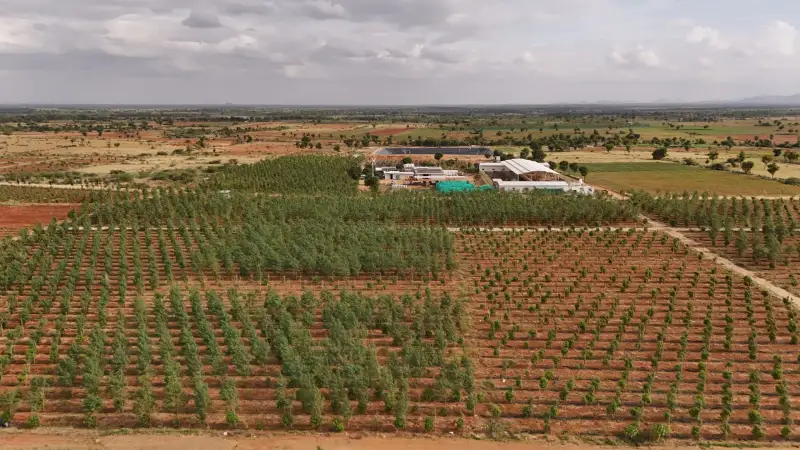
Indian sandalwood is a root hemi-parasite that cannot survive or grow its heartwood without establishing physical root connections with neighboring host plants. Companion trees supply essential mineral nutrients and water throughout the lifecycle.
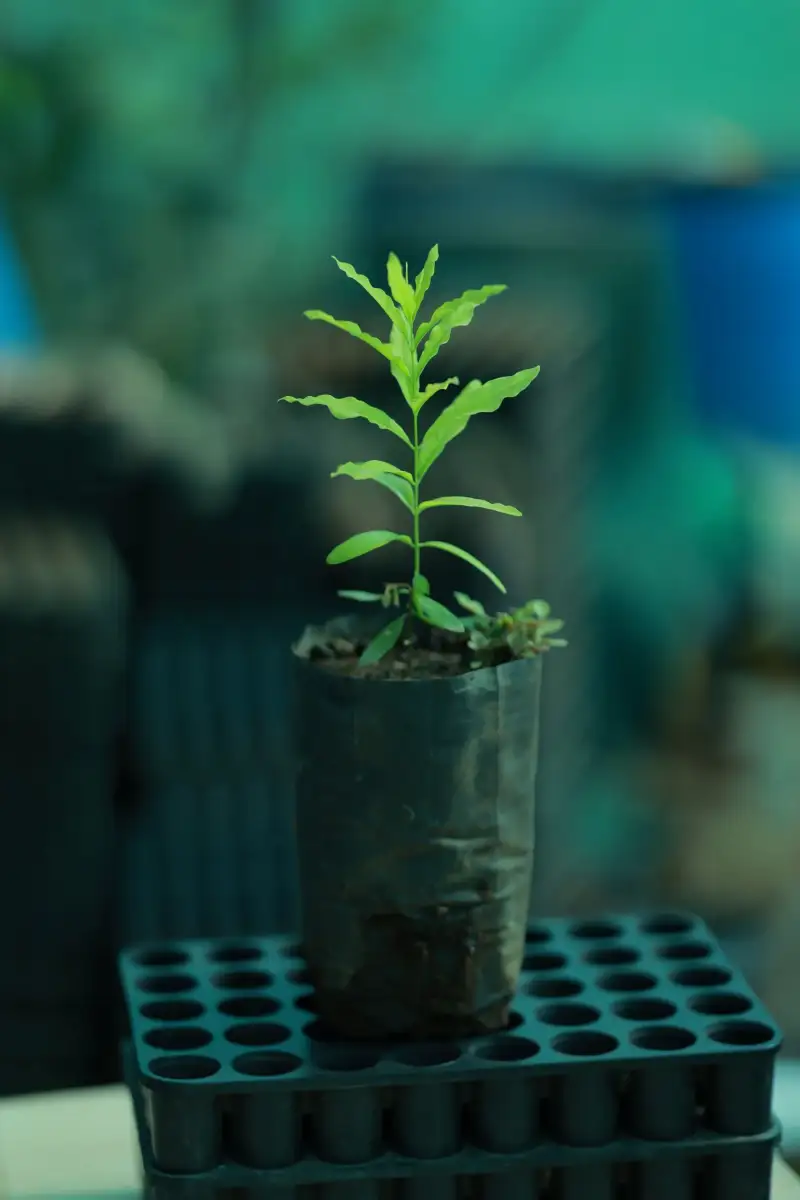
- Primary Host: Short-term hosts like Cajanus cajan provide rapid nutrient exchange during the early sapling phase of sandalwood farming in India.
- Secondary Host: Long-term woody hosts like Casuarina or Pongamia sustain the sandalwood tree as it matures on our managed farms.
- Nutrient Transfer: Modified root tips called haustoria latch onto host roots to draw sap and essential minerals from the soil.
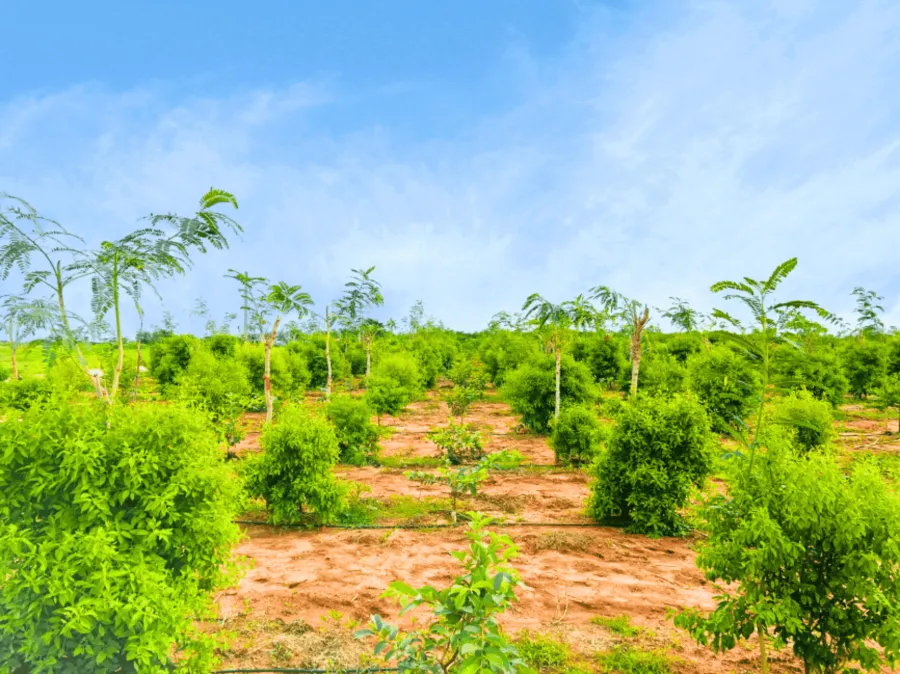
- Planting Layout: Agronomists space host trees carefully between sandalwood rows to ensure balanced underground competition and healthy growth.
- Ecosystem Balance: Diverse companion planting mimics natural forest habitats rather than a sterile mono-crop, supporting long-term soil health.
- Lifecycle Support: Host plants provide crucial nitrogen fixation and shelter while the sandalwood trees slowly develop their valuable heartwood.
Read more about this hemi-parasitic relationship in our guide on why sandalwood needs host trees for a healthy plantation.
How long does sandalwood take to grow?
Sandalwood farming in India requires a long operational horizon and careful biological management before heartwood deposition is complete.
- Early Growth: Saplings establish their vital root connections with host plants during the first few years on site.
- Sapwood Stage: Young trees develop pale outer sapwood before heartwood deposition gradually begins in the center.
- Heartwood Formation: Aromatic oils accumulate slowly in the core over many years of sustained tree growth.
- Intercrop Support: Seasonal crops and fruit trees between the rows provide interim activity while trees mature.
- Harvest Timing: Final timber extraction happens only when experienced agronomists confirm adequate heartwood maturity.
- Plant Age: Trees planted in our earlier Timber project in 2022 are about 4.5 years old as of late 2026.
Families reviewing timber timelines should also explore our project overview at Timber to understand earlier farm layouts and expected cycles.
How are sandalwood trees cared for through the years?
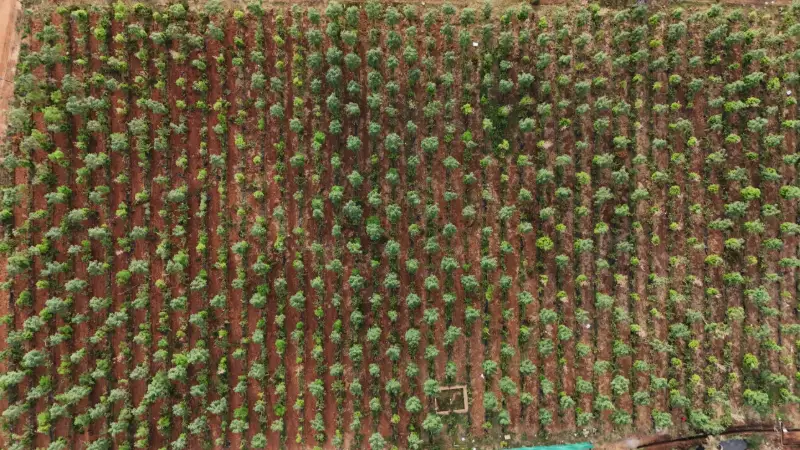
A managed sandalwood plantation requires continuous attention to irrigation, weed control, canopy pruning, and security patrols so owners can enjoy the long-term benefits without living on site.
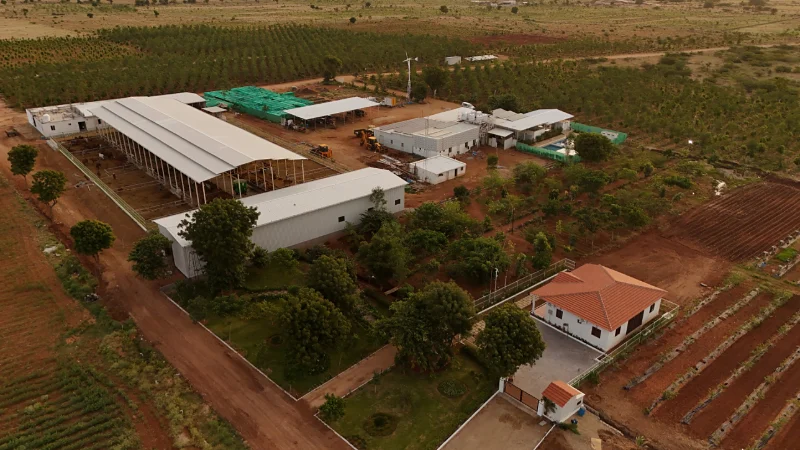
- Drip Irrigation: Automated drip lines deliver precise water volumes directly to every individual sandalwood sapling and its paired host root zone across our managed farmland near Lepakshi.
- Nutrient Management: Organic inputs and micro-nutrients are applied according to soil test results each season to support steady heartwood development.
- Canopy Pruning: Regular trimming encourages straight vertical trunk growth and prevents excessive branching, which helps produce high-quality sandalwood timber over the years.
- Pest Monitoring: Field teams inspect leaves, bark, and root zones frequently to catch insect activity or fungal spots early before any damage spreads.
- Perimeter Security: E-fencing, 24-hour guards, and CCTV cameras protect the boundary lines year-round, ensuring your plot remains secure day and night.
These structured operations ensure each tree receives consistent professional care from planting day to harvest.
How does sandalwood farming work in Andhra Pradesh?
How does sandalwood farming work in Andhra Pradesh?Sandalwood farming in Andhra Pradesh relies on suitable red soil, secure bore-well irrigation, professional field management, and clear government regulations for rural land.
- Soil and Climate: The red soil with a neutral pH range and warm local temperatures near Hindupur support healthy Indian sandalwood growth.
- Water Management: Deep bore-wells, drip irrigation networks, man-made farm ponds, and rainwater harvesting structures keep saplings hydrated through dry months.
- Host Tree Pairing: Sandalwood is a root hemi-parasite that requires living host plants nearby to supply essential nutrients for proper heartwood development.
- End-to-End Care: A professional on-site farm team handles daily watering, nutrition, pruning, e-fencing, and security guards with CCTV around the clock.
- Land Title: Plots in projects like GreenX are registered directly in the buyer's name at the local Sub-Registrar Office.
- Harvest Sharing: Written agreements set out clear produce sharing ratios, such as 70% for owners from the final sandalwood harvest.
- Weekend Access: Owners can visit their plots anytime for a day trip or build a weekend home on up to 10% of the land area.
To understand how these managed plots compare with purchasing bare acreage, read our guide on managed farmland vs buying agricultural land yourself.
How can families own or manage sandalwood land?
How can families own or manage sandalwood land?
Families interested in sandalwood can choose between fully managed farmland ownership or professional farm management services for land they already own. Both pathways offer expert agronomic execution without daily labor burdens.
- Managed Farmland: Own a titled plot where our professional team handles all planting, upkeep, and harvesting under a written agreement, perfect for sandalwood farming in India.
- Farm Management: Owners of existing rural land can hire agronomists to plan and run their acreage through dedicated advisory and field execution.
- Transparent Agreements: All operational terms, cost structures, and produce shares are documented in writing so expectations remain clear for every owner.
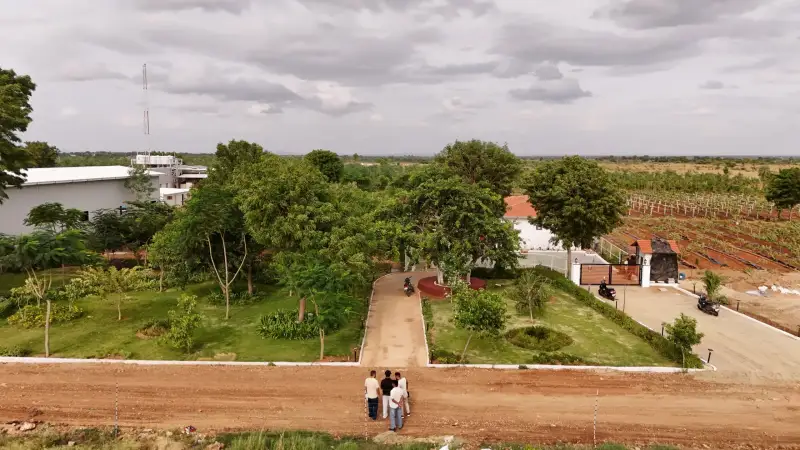
- Family Visits: Regular site visits allow owners to inspect tree health, check drip lines, and enjoy the tranquil farm campus near Lepakshi.
- Advisory Support: Sales and agronomy teams answer questions about plot selection, legal titles, and scheduled visits to working plantations.
- Clear Produce Sharing: Projects like GreenX define precise harvest shares upfront, ensuring owners receive their rightful portion when trees mature.
Plan a visit through our contact page to walk through a working plantation near Bengaluru.
Frequently asked questions
What is the primary keyword for this article?
Why does sandalwood need host plants to grow?
How long does sandalwood take to mature?
Can I visit a sandalwood farm near Bengaluru?
Do I need farming experience to own a plot?
Reading is one thing. Walking the farm is another.
Come for a site visit, stand on the plots and ask our team whatever is on your mind.